

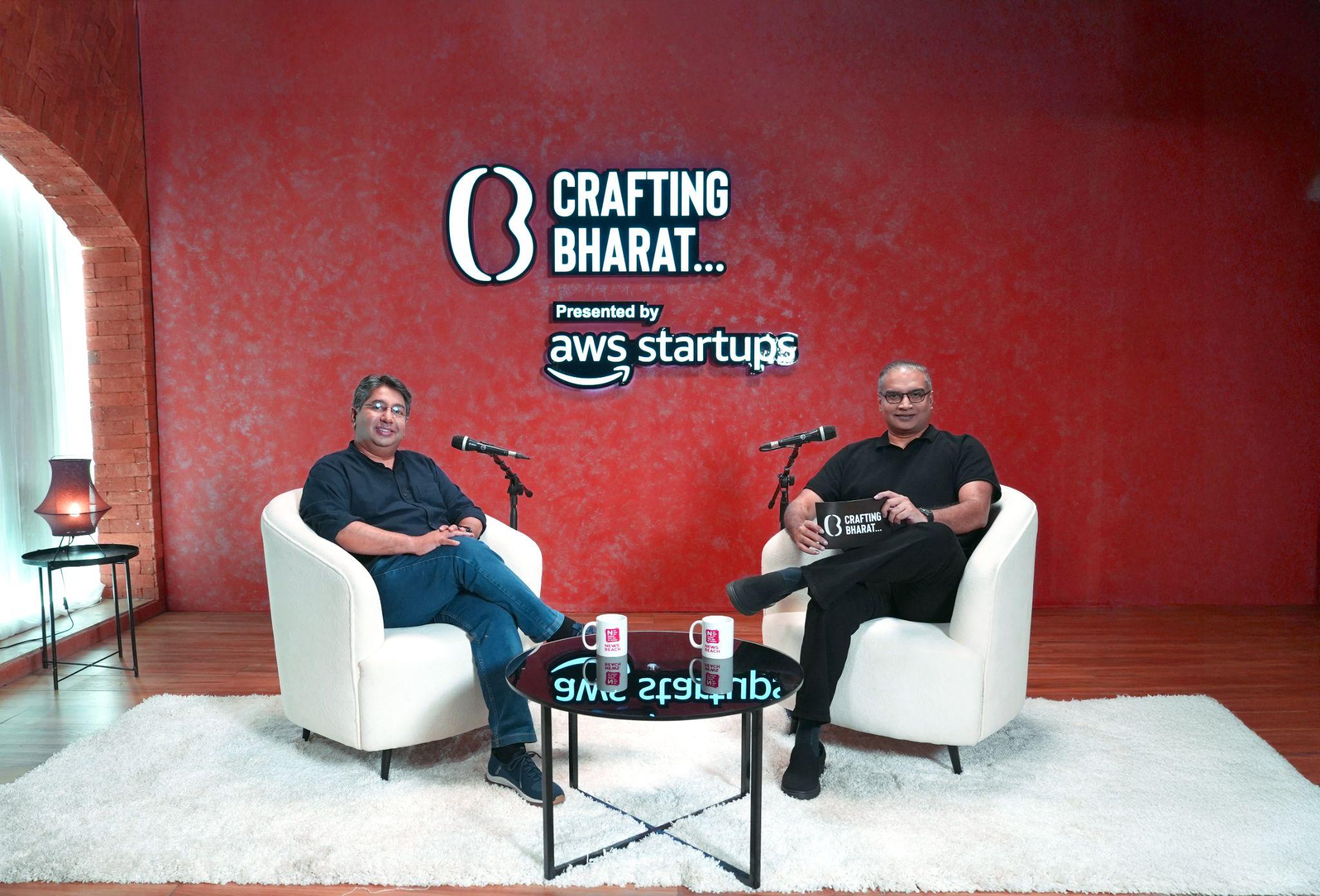
Shyatto Raha, Founder & CEO of MyHealthcare, on how cloud, AI, and data are reshaping hospitals into connected, patient-centric ecosystems and how AWS is helping them scale rapidly.
Healthcare systems worldwide are undergoing a profound transformation as technology reshapes how care is delivered and accessed. In India, this transformation is gaining momentum amid rising population demands and lifestyle diseases. By harnessing digital innovation, both public and private stakeholders are working to bridge gaps in accessibility and affordability, creating a more inclusive and equitable healthcare landscape.
The “Crafting Bharat – Season 3” presented by AWS Startups, an initiative by NewsReach and production partner – HT Smartcast, explores the founders’ resilience, agility and passion to build a super startup and inspire the next wave of entrepreneurs. This series is hosted by Gautam Srinivasan, famed for hosting a diverse range of TV and digital programs, currently consulting editor at CNBC (India), CNN-News18, Forbes India, and The Economic Times.
In this episode, we spotlight Shyatto Raha, Founder & CEO of MyHealthcare, on building a cloud-powered operating system that connects hospitals, doctors, and patients seamlessly. Backed by AWS infrastructure, the platform enables rapid scalability, real-time data access, and AI-driven insights, helping providers transition from fragmented systems to intelligent, patient-centric care. Discover the inspiring where we deconstruct the blueprint of growth for India’s super startups through this series.
Edited Excerpts:
Looking back, what strategic decision would you have approached differently for MyHealthcare?
From a startup perspective, I would say funding. In the early stages, if you have strong product-market fit, investors are eager and opportunities to raise capital are abundant. The current thinking is to raise as much as possible during that phase, and in hindsight, that is something we could have done better. I have always been slightly conservative, believing you should raise only what you need since there is a responsibility to return that capital. This often creates a dilemma about how much is too much or too little. Looking back, it is better to raise more early on because it becomes harder later. A larger runway allows you to experiment, scale faster, and pursue sharper growth opportunities.
Post pandemic, the healthcare ecosystem was pushed toward digital adoption. Since then, how easy has it been to convince hospitals to move from legacy systems to a modern cloud-based healthcare operation system?
It has been a significant shift when you compare the pre-COVID and post-COVID periods. Without the pandemic, this transition would have been much harder. Convincing hospitals earlier meant aligning multiple stakeholders, with doctors being the most critical. If doctors were not willing to adapt, change simply would not happen. During COVID, the entire ecosystem, from doctors to operational teams, was compelled to adopt digital tools. There was also an urgency to act quickly. Traditional on-premises systems were not practical since hospitals could not set up physical infrastructure in such a short time. MyHealthcare, a cloud-based solution on AWS, we were able to scale rapidly and onboard hospitals within hours. This demonstrated the value of moving to a modern, clinically driven system rather than relying only on billing or supply chain-focused platforms. Over time, hospitals began to see clear revenue and efficiency benefits. Today, there is a much stronger acceptance of cloud and digital solutions, and the shift is now approaching its peak.
MyHealthcare is expanding its product portfolio. What are your plans to build a horizontal SaaS platform? How are you shaping your business and monetization models to improve unit economics and revenue predictability?
Being a first mover in this space has required significant effort because healthcare has traditionally not adopted SaaS models. We are among the first to build a fully horizontal SaaS health tech business in the HMS and EMR space, where legacy systems were largely based on perpetual licensing. Hospitals are now beginning to understand the SaaS benefits. By partnering with a product-led company, they gain access to a growing suite of horizontal solutions without having to build them internally.
Our approach is to deepen our engagement with hospitals by developing horizontal assets such as generative AI and agentic AI tools on the clinical side. These solutions help improve care delivery while also enabling us to expand our service offerings and revenue streams. We are also building additional products, including procurement platforms, to create a more comprehensive ecosystem. This strategy allows us to offer add-on capabilities that strengthen our horizontal SaaS model. Over time, SaaS provides greater revenue predictability through a recurring monthly model. Since our value proposition is linked to hospital capacity, as hospitals grow, our revenue scales alongside them. This combination supports stronger unit economics and a more sustainable growth platform.
How are you using generative AI and agentic AI to power the next generation of healthcare? How does AWS support your goals?
We are focused on using generative AI and agentic AI to simplify workflows for doctors and clinicians. Given the time and efficiency pressures they face, including both doctors and nurses, our goal is to improve the quality of care while reducing administrative errors. These priorities are central to the first set of tools we have brought to market. We are encouraged by the response, with nearly 90 percent of our hospitals adopting these solutions within the first 60 days. This marks the beginning of our broader journey with generative AI and agentic AI. Building these capabilities requires strong technology partnerships, which is where AWS plays a key role. We work closely with their startup team by sharing our problem statements and collaborating to develop solutions that can be scaled effectively.
Stay tuned to Crafting Bharat – Season 3 as we bring you these inspiring entrepreneurs for insightful and candid discussions with Gautam Srinivasan.
Quote: “If you want to build a business, build it in India. The talent, the scale, and the opportunity here are unmatched anywhere in the world today.”
YouTube: https://www.youtube.com/@CraftingBharat
Facebook: https://www.facebook.com/craftingbharatofficial/
Instagram: https://www.instagram.com/craftingbharat/
